Deep Plane faceliftin Turin, Italy

Bringing back into place what has descended over the years, without pulling the skin and without changing your features.

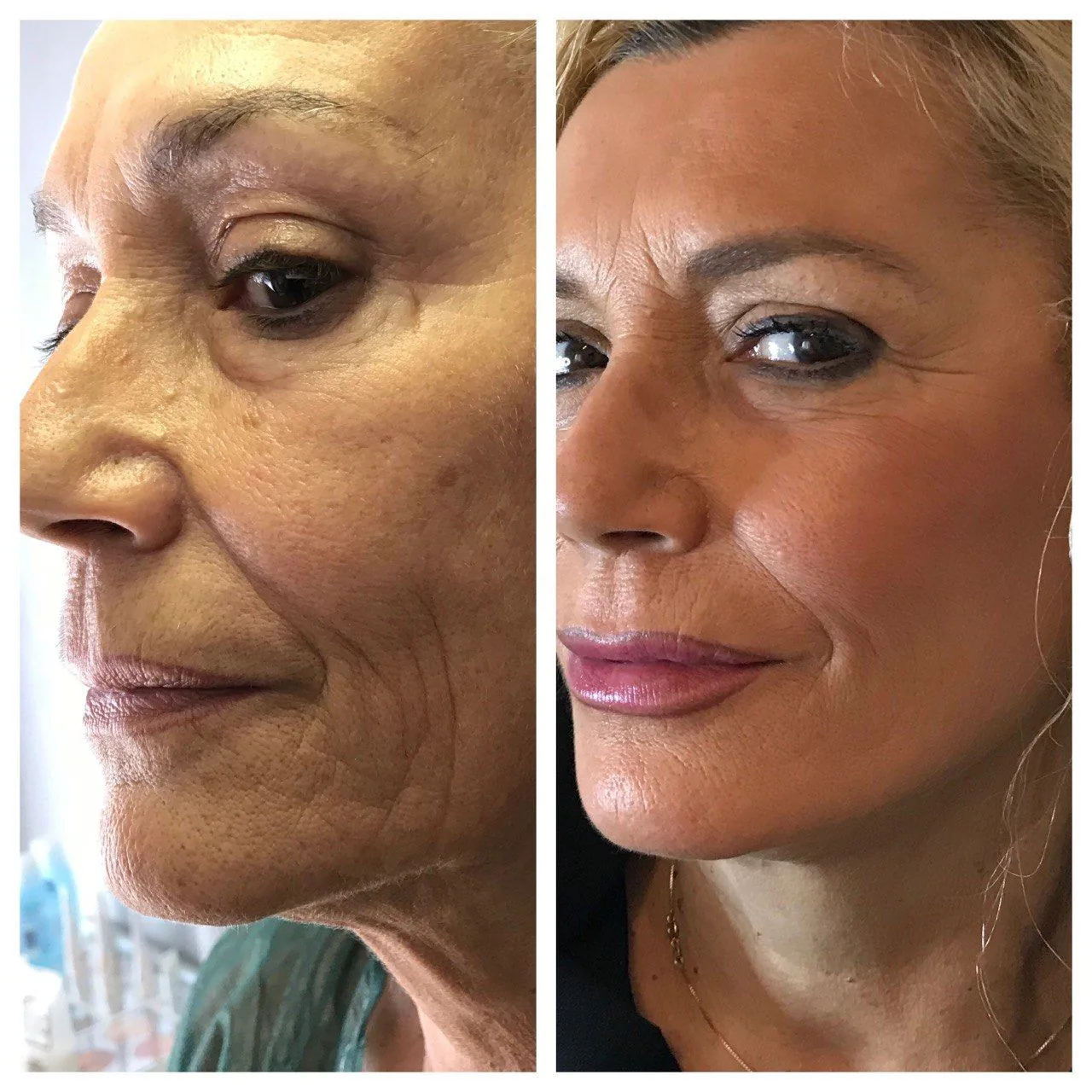
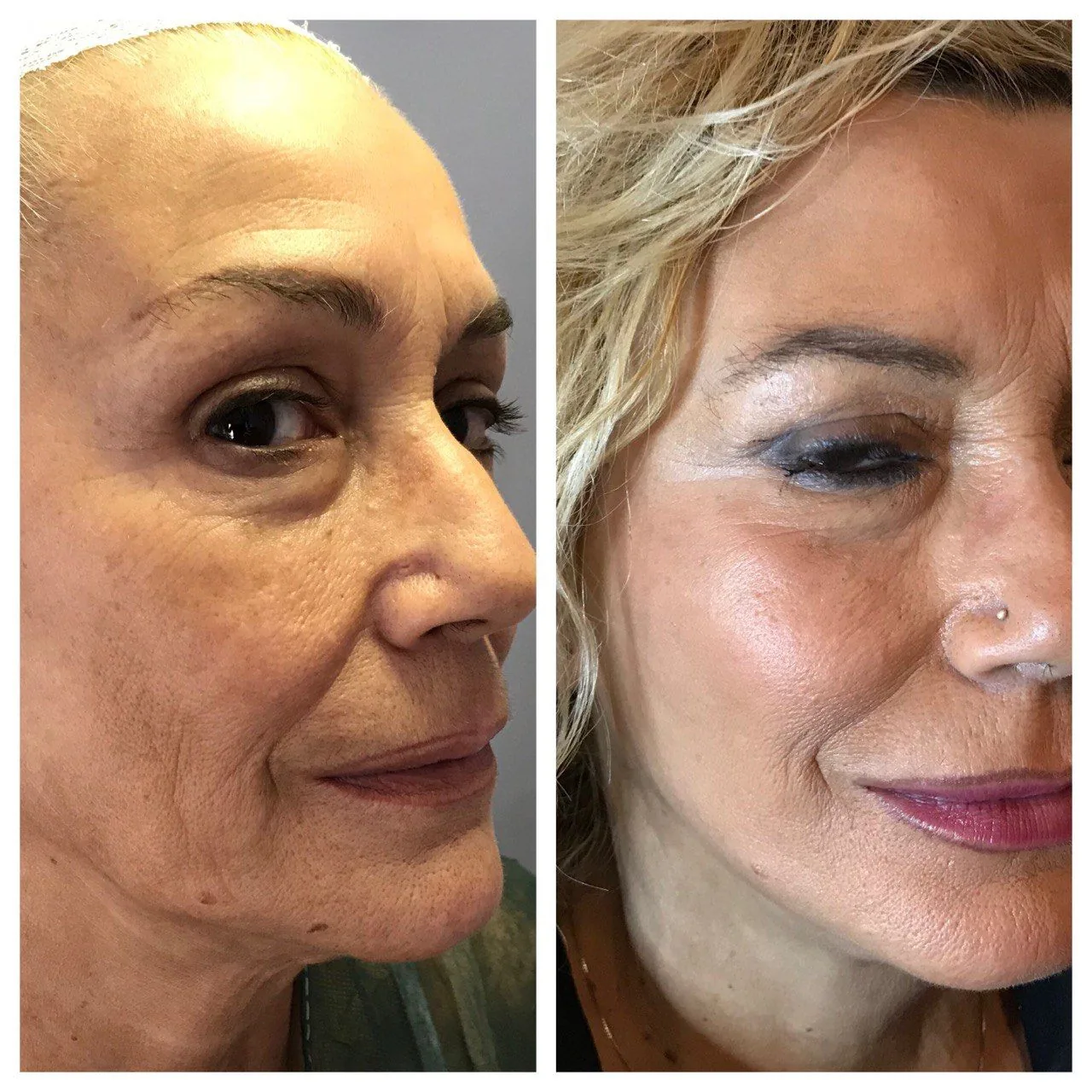
Facelift before and after photos

See some before and after results of facelift surgery.
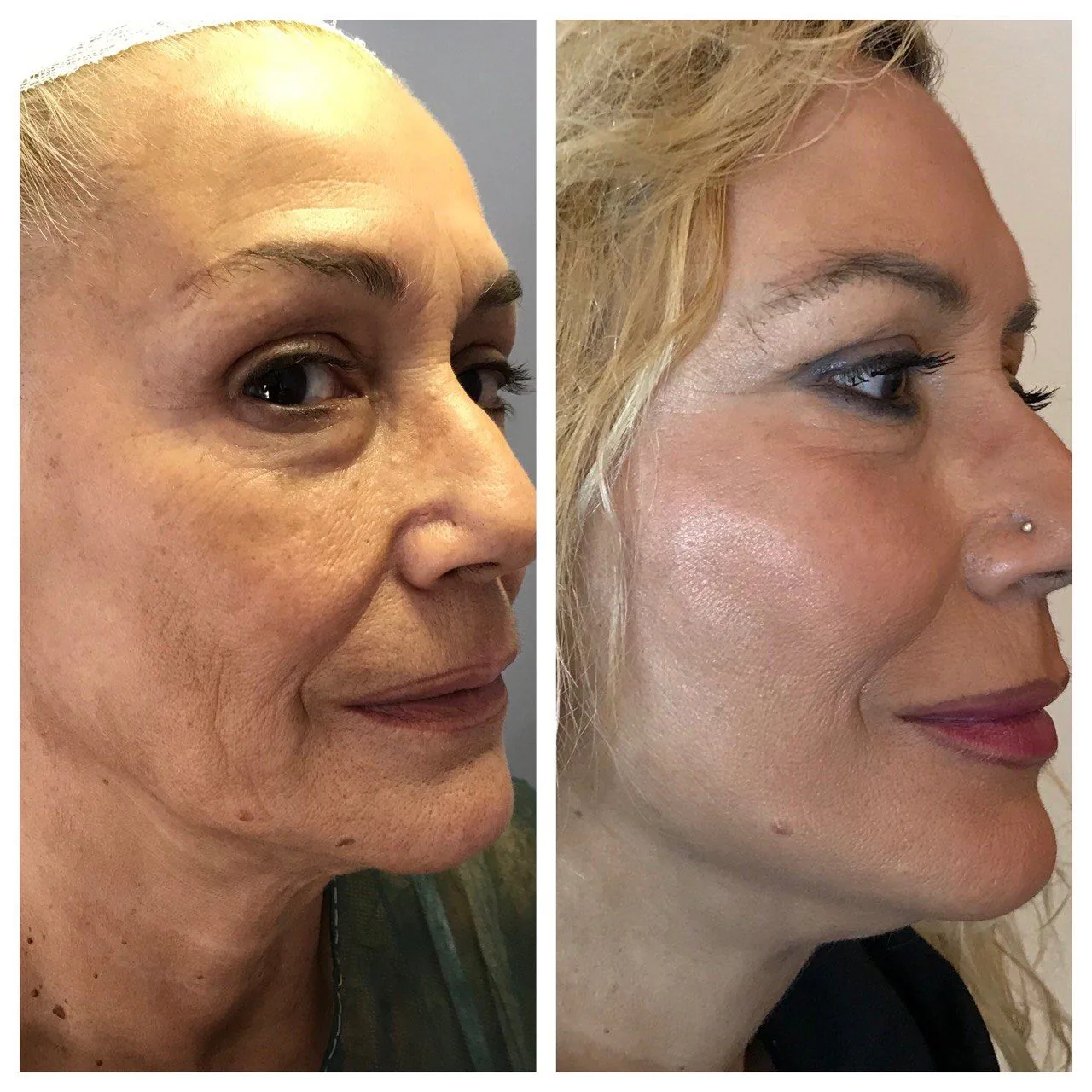
Photos are published with the patients' written consent. To respect their privacy, other before and after cases can only be seen in the clinic, during the consultation.


In short. A facelift corrects sagging of the cheeks, jawline and neck. The technique I use most often is the Deep Plane facelift: it works beneath the SMAS (the supporting layer of the face) and releases the retaining ligaments, so that cheeks, jawline and neck can be repositioned as a single unit with little tension on the skin. I perform it under local anaesthesia with sedation, in Turin, Italy. It is not right for everyone: sometimes the problem is lost volume or skin quality, and then the right answer is something else.

When a facelift is indicated

Over time the face does not only lose elasticity: the deep tissues descend, taking the cheeks, the nasolabial folds and the jawline with them, while the neck loses definition. A facelift is indicated when these changes are mainly due to the descent of the tissues, that is, when putting them back in place really makes a difference.

What matters is not your age, but how far the tissues have descended and how much elasticity the skin has lost.

When I do not recommend surgery

First, understanding: sometimes the most useful thing I can do at a consultation is to tell you that you do not need a facelift, or not yet. I will not suggest it if:

The techniques I use

There are several facelift techniques, working at different depths. The choice depends on how far the tissues have descended, on skin quality and on what you want.

TechniqueWhat it doesWhen I use it
Deep PlaneReleases the deep ligaments and repositions cheeks, jawline and neck as a single unit, without tension on the skin.In most cases of sagging of the midface and the jawline.
SMAS lift (plication, SMASectomy, SMAS flap)Tightens the superficial musculo-aponeurotic system (SMAS), the layer that supports the face.When sagging is moderate and there is no need to work on the deeper plane.
MACS lift and short scarA mini-lift with shorter incisions and scars.For early, mild laxity.
Neck lift (platysmaplasty)Rebuilds the support of the neck and corrects the muscle bands, often through a small incision under the chin.On its own or together with a facelift, when the neck is loose.

For the neck there is a dedicated page: neck and chin lift.

How I work

I furthered my training in the Deep Plane technique in New York with Prof. Andrew A. Jacono, one of the surgeons who have contributed most to developing and describing it (you can see the photo of the course on the About page). His book The Art and Science of Extended Deep Plane Facelifting is one of my working references.

At the consultation I look at the face as a whole: the skin, the volumes, the bone structure, the neck, and the way you move when you speak and smile. Often the most natural result comes from combining several steps, for example a facelift with fat grafting to restore lost volume, or with a blepharoplasty if the eyelids have changed too. I explain what can be achieved, what cannot, and why.

The operation

I perform the facelift under local anaesthesia with sedation, managed by a specialist anaesthetist. The operation takes place in Turin: at Aesthetic Clinic, in the operating theatre authorised by the Piedmont Region for complex outpatient surgery, or in a private hospital when I prefer you to spend the night in a hospital setting.

The incisions follow the natural creases in front of and behind the ear and, if the neck needs work, under the chin: they are designed to become hard to see as they heal. I close them in two layers: absorbable internal stitches, which support the wound edges for about six months and make the scar more stable, and very fine surface stitches, largely hidden by the hair, which I remove after about 10 days.

Recovery

In most cases you go home the same day. After sedation you must not drive that day: someone can drive you home, or you can take a taxi. In the first days the face is swollen and bruises may appear, which fade over the following weeks; the result can really be appreciated once the swelling has settled, usually over a few months.

WhenWhat
After about 7 daysYou can usually go back to work: the stitches are very fine and largely hidden by the hair.
After about 10 daysI remove the stitches.
After about 15 daysYou can gradually resume sport, starting with lighter activity as I advise at the check-up, and be outdoors, protecting your face with a very high protection sunscreen (SPF 50+) and avoiding direct sun.
After about 4 monthsYou can expose your face to direct sunlight.

These times are approximate: they can change depending on the technique and on how you heal, and I confirm them at your check-ups after surgery.

If you live abroad: plan to stay in or near Turin at least until the stitches are removed and the first check-ups are done, around 10 days. Before flying, I check that you are ready to travel. See also International patients.

Risks and limits

A facelift is a surgical operation and, like any operation, it has risks. The most important, which we discuss together at the consultation, are:

A facelift also has limits: it does not stop ageing, which goes on over the years; it does not improve skin quality on its own; it does not restore lost volume, which needs to be rebuilt separately. Knowing this beforehand avoids disappointment afterwards.

What patients say

“I hold the Doctor and his fantastic team of true professionals in the highest esteem, and I praise and thank them for giving me back a little youth… As a healthcare worker I had very high expectations about facial plastic surgery, and I wanted to be certain of an excellent result, which is exactly what I received…”

— A.M., Turin

Real patient reviews, translated faithfully from Italian; cuts are marked […]. The original Italian reviews are on the testimonials page and on GuidaEstetica.

How much does a facelift cost?

Every face is different and every operation is tailored, so the cost depends on the technique, the areas to be treated, any combined procedures and the type of stay. Because every case is different, I define it after the consultation, in a personalised written quote that also shows the first available date for surgery.

Frequently asked questions

What is the difference between a Deep Plane facelift and an SMAS facelift?

They work at different depths. SMAS techniques reshape the face by tightening or repositioning the SMAS, the supporting layer under the skin. The Deep Plane facelift works beneath the SMAS and releases the retaining ligaments, so that the cheeks, jawline and neck can be moved as a single unit with little tension on the skin. Neither is better for everyone: the choice depends on your anatomy, on how far the tissues have descended and on the result you want.

Is a facelift done under general anaesthesia?

Usually not: I perform the facelift under local anaesthesia with sedation, managed by a specialist anaesthetist. The final choice is made with the anaesthetist, based on your health and the procedure.

Is the result of a facelift permanent?

A facelift brings the tissues back to a younger position, but it does not stop ageing: the face keeps changing over the years. How long the result lasts depends on the technique, skin quality, weight, sun exposure and smoking.

At what age should you have a facelift?

There is no single right age: what matters is how far the tissues have descended and how much elasticity the skin has lost. Sometimes a facelift is indicated at 45, sometimes at 60 less invasive treatments are enough. We assess it together at the consultation.

How long should I stay in Turin after a facelift if I live abroad?

Stitches are removed after about 10 days, and the first check-ups take place in that period. If you live abroad, plan to stay in or near Turin for at least that time; I will confirm the right length of stay for your case at the consultation.

Further reading (in Italian)

References

Written and medically reviewed by Dr Giulio Maria Maggi, plastic surgeon (Turin Medical Board no. 20595, AICPE member) — last reviewed:

REQUEST A CONSULTATION