Liposuction in Turin, ItalyLiposculpture of the body's contour

Liposuction and liposculpture are surgical procedures used to reduce localised fat deposits and reshape the body's contour. I have performed them in Turin for more than twenty years, defining the indication and the surgical plan on the basis of each person's anatomy and goals.

Liposuction before and after photos
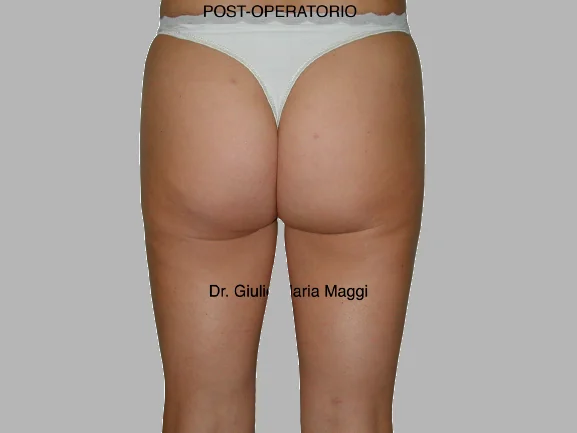
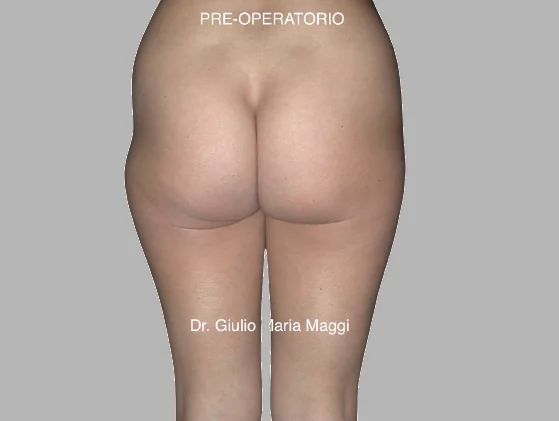
The before and after photos show real cases of Dr Giulio Maria Maggi, published with the patients' written consent. Results are individual and depend on the starting point, the areas treated and the surgical indication.


In short. Liposuction reduces localised fat that persists despite a healthy lifestyle and reshapes the body's contour. It is not a way to lose weight and it does not remove excess skin. I use the tumescent technique, with small cannulas through short incisions. Sometimes the right answer is a tummy tuck, a non-surgical treatment, or nothing at all.

Liposculpture or liposuction to reduce localised fat

Liposuction and liposculpture are indicated for localised fat deposits that persist despite a healthy lifestyle. The goal is not weight loss, but a better body contour through a selective reduction of fat in the areas where surgery is properly indicated.

Skin quality, fat distribution, body proportions and your expectations must be assessed together: removing more fat does not necessarily mean a better result.

The difference between liposuction and liposculpture

Liposuction mainly refers to removing a localised fat deposit. Liposculpture puts the emphasis on reshaping the body's contour and on a harmonious relationship between neighbouring areas. In practice the techniques can overlap: what matters is a surgical plan built on each person's anatomy.

Which areas can be treated?

When indicated, the procedure can be used in several areas of the body. The most commonly treated include:

Whether an area can be treated depends not only on the presence of fat, but also on the quality of the skin and its ability to retract, on proportions and on any laxity or other anatomical changes.

In particular, when localised fat on the abdomen comes with significant skin laxity or changes in the abdominal wall, liposuction alone may not be enough: see the tummy tuck page.

The operation

I use the tumescent technique: before the fat is removed, the areas to be treated are infiltrated with a solution containing a local anaesthetic and a vasoconstrictor, as clinically indicated.

The fat is removed with small-calibre cannulas inserted through short skin incisions. The extent of the operation, the type of anaesthesia or sedation and its duration depend on the number and characteristics of the areas treated. Before surgery, a visit and the necessary tests are scheduled to assess your health.

Recovery

Recovery time varies with the extent of the procedure and the areas treated. After surgery a compression garment is generally worn for the period I indicate. Return to work, physical activity and sun exposure are set individually at the post-operative check-ups.

If you live abroad: plan to stay in or near Turin for the first check-ups, and until I confirm you are ready to travel. See also International patients.

Risks and limits

Liposuction is a surgical operation and has risks, which we discuss together at the consultation. Among them:

Liposuction does not treat cellulite, does not remove excess skin and is not a substitute for weight loss. The fat that remains can increase again if your weight goes up.

When to consider a non-surgical treatment

Not every fat deposit or irregularity of the body's contour needs surgery. At the consultation we assess whether surgery is really the most appropriate indication or whether there are less invasive alternatives, depending on the type and extent of the problem, the quality of the tissues and the result that can realistically be achieved.

In properly selected cases, cryolipolysis (a non-invasive treatment to reduce localised fat) or VelaShape (non-surgical body contouring) can be considered. These procedures have different indications and potential from liposuction and are not equivalent to it.

Revision liposculpture: correcting irregularities and loss of volume

Part of my work concerns patients who have already had liposuction or liposculpture elsewhere and have irregular contours, residual areas from under-correction, or dents and hollows caused by removing too much fat.

Revision surgery requires a different assessment from a first liposuction. In some cases residual areas can be selectively corrected; in others, especially when the problem is over-correction, removing more fat could make the defect worse.

In properly selected patients, fat grafting may then be indicated: the patient's own fat is used to rebuild altered volumes and transitions, with the aim of improving dents, hollows and disharmony caused by previous excessive removal.

"The most important problem I see in patients who were not operated on optimally elsewhere is the deformity caused by over-correction."

Dr Giulio Maria Maggi

What patients say

“Dr Maggi truly listens to your wishes and your goals. He is kind in his approach, honest in his assessment and unmistakably clear in his vision. He has an impeccable aesthetic eye, no doubt due both to his artistic background and to his personal taste for what is beautiful.”

— A.M., Turin

“At 53 I decided to have liposculpture of the abdomen and flanks. With hindsight, I should have done it years ago, because the result after just 2 weeks is really excellent. Dr Maggi is a highly qualified professional, attentive to meeting the patient's requests as well as possible.”

— Umba

Real patient reviews, translated faithfully from Italian; cuts are marked […]. The original Italian reviews are on the testimonials page and on GuidaEstetica.

How much does liposuction cost?

The cost depends on the number and extent of the areas treated, the anaesthesia and any combined procedures. Because every case is different, I define it after the consultation, in a personalised written quote that also shows the first available date for surgery.

Frequently asked questions

Is liposuction a way to lose weight?

No. Liposuction is not a weight-loss treatment: it is indicated to reduce localised fat deposits and improve the body's contour in properly selected patients.

What is the difference between liposuction and liposculpture?

Liposuction mainly refers to removing localised fat deposits; liposculpture puts more emphasis on a plan to reshape the body's contour harmoniously, often by treating several areas together.

Which areas can be treated?

Commonly treated areas include the abdomen, flanks, thighs, knees, arms and the area under the chin. Whether an area is suitable depends on how the fat is distributed, the quality of the skin and individual characteristics.

When is liposuction of the abdomen not enough?

When localised fat comes with significant skin laxity or changes in the abdominal wall, liposuction alone may not be the most appropriate procedure. Choosing between liposuction and a tummy tuck requires a clinical assessment.

Are there non-surgical alternatives to liposuction?

In properly selected cases, non-surgical or non-invasive treatments can be considered, such as cryolipolysis or body-contouring technologies. They are not equivalent to liposuction, and whether they are indicated depends on the problem and the result that can realistically be achieved.

Can irregularities from a previous liposuction be corrected?

In some patients, irregularities from under-correction or over-correction can be improved. When too much fat was removed, fat grafting with the patient's own fat may be indicated after assessment.

Further reading (in Italian)

Written and medically reviewed by Dr Giulio Maria Maggi, plastic surgeon (Turin Medical Board no. 20595, AICPE member) — last reviewed:

REQUEST A CONSULTATION